Article Summary
Aluminum Mesh Panels are lightweight metal products that combine corrosion resistance, versatility, and a clean architectural appearance. Depending on the manufacturing process, aluminum mesh panels can be made as woven mesh, perforated sheets, expanded metal, crimped wire mesh, or laser-cut panels. Each type has different characteristics and is suited to different applications, from window screens and filtration to building facades, security screens, ceilings, partitions, and industrial flooring.
HIGHTOP supplies a wide range of aluminum mesh sheets and panels in different structures, opening patterns, dimensions, and applications. The right product should be selected according to the required strength, open area, appearance, ventilation, filtration performance, and installation method.
View HIGHTOP Aluminum Mesh Panels
What Are Aluminum Mesh Panels?
Aluminum mesh panels are metal mesh products manufactured from aluminum sheet, plate, or aluminum wire.
Unlike steel mesh, aluminum offers a lower material weight while maintaining good corrosion resistance. This makes it particularly useful when a project requires a combination of low weight, durability, ventilation, and visual appeal.
However, “aluminum mesh panel” is a broad product category rather than a single mesh type.
The manufacturing process determines the final structure and performance. Common types include:
- Aluminum woven mesh
- Perforated aluminum mesh
- Expanded aluminum mesh
- Crimped aluminum wire mesh
- Laser-cut aluminum mesh panels
Understanding these differences is important when purchasing mesh for a construction, industrial, architectural, or filtration project.
Main Types of Aluminum Mesh Panels
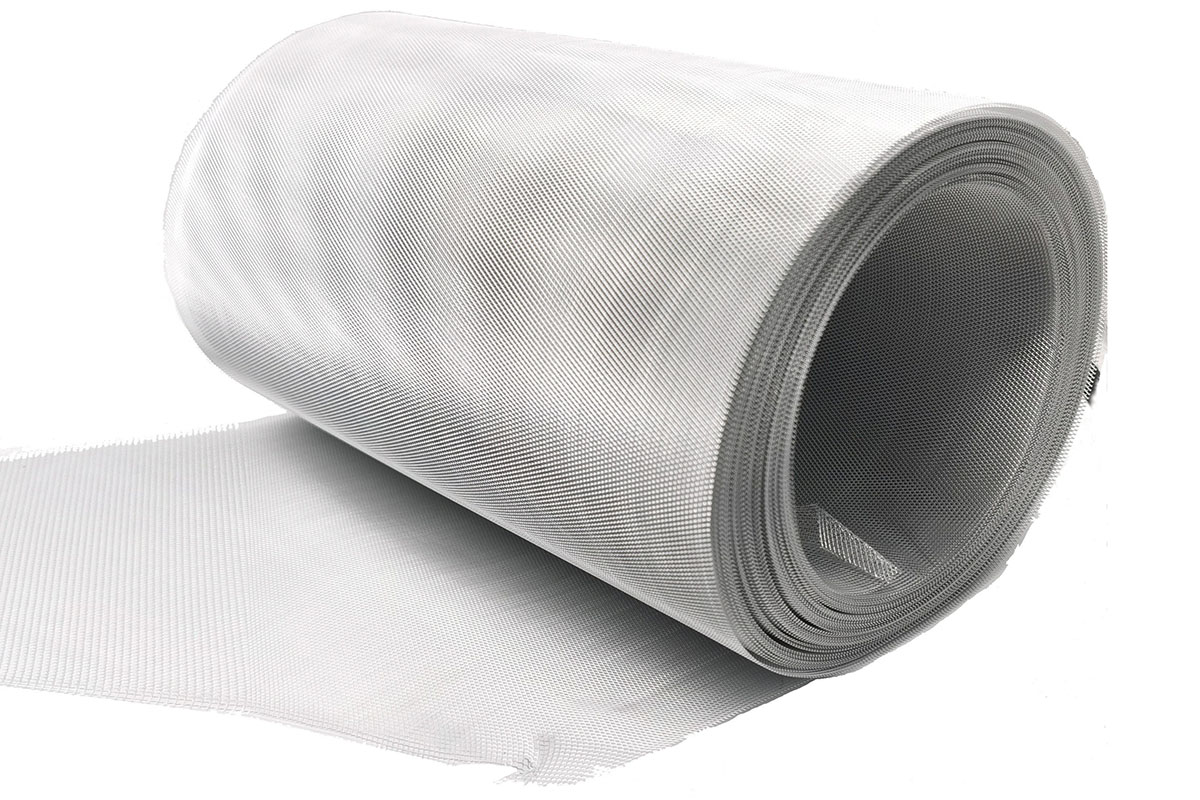
Aluminum Woven Mesh
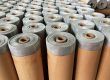
Aluminum woven mesh is manufactured by interweaving aluminum wires on a weaving machine.
Plain weave is one of the most common configurations, producing a regular square opening pattern.
Fine aluminum woven mesh is commonly selected for:
- Window and door screens
- Insect screens
- Filtration
- Sieving
- Ventilation
Its lightweight construction also makes it relatively easy to cut and install.
For filtration applications, buyers should pay particular attention to mesh count and wire diameter because these specifications directly influence the opening size and filtration performance.
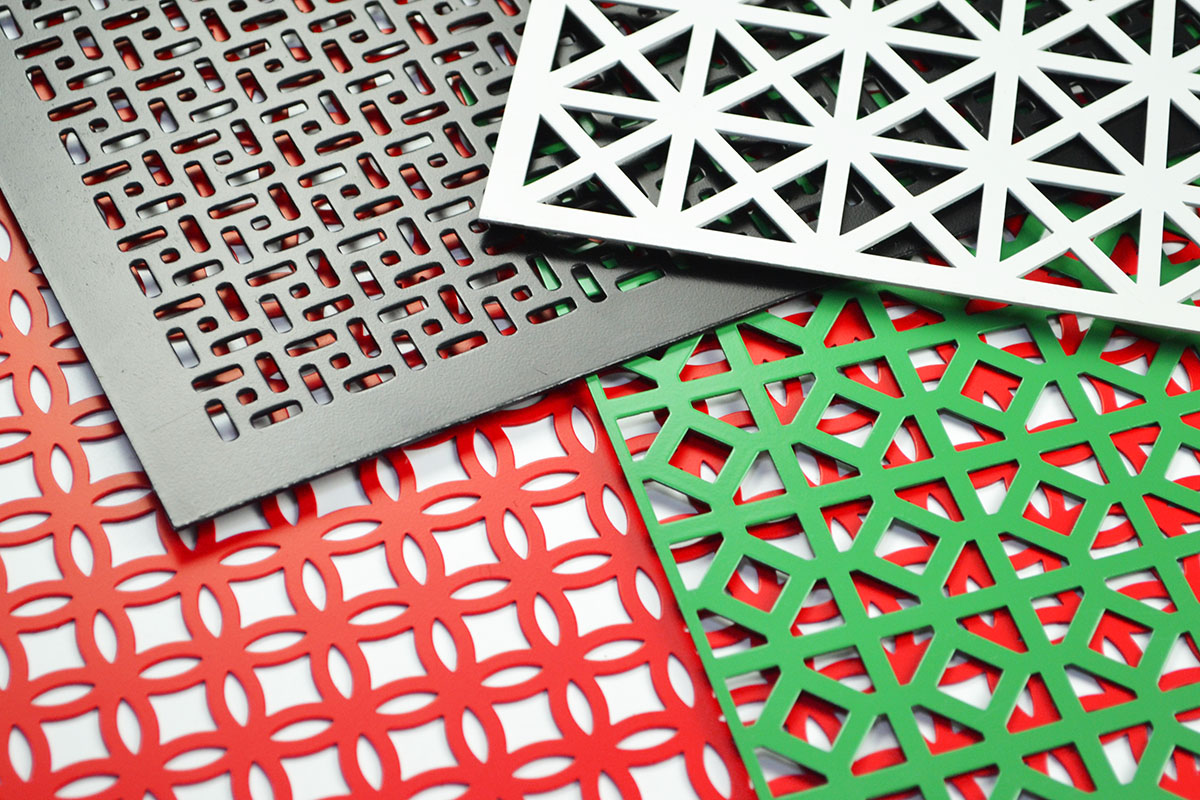
Perforated Aluminum Mesh Panels
Perforated aluminum panels are manufactured by punching openings through an aluminum sheet or plate.
The holes can be produced in different shapes, including:
- Round
- Square
- Slotted
- Round-end slots
- Star-shaped
- Custom decorative patterns
Round holes are one of the most common options because they provide a straightforward combination of manufacturing efficiency, strength, and open area.
Perforated aluminum panels are frequently used for architectural facades, ceilings, equipment covers, ventilation panels, screens, and decorative applications.
The final performance depends on factors such as hole diameter, pitch, sheet thickness, and open-area percentage.
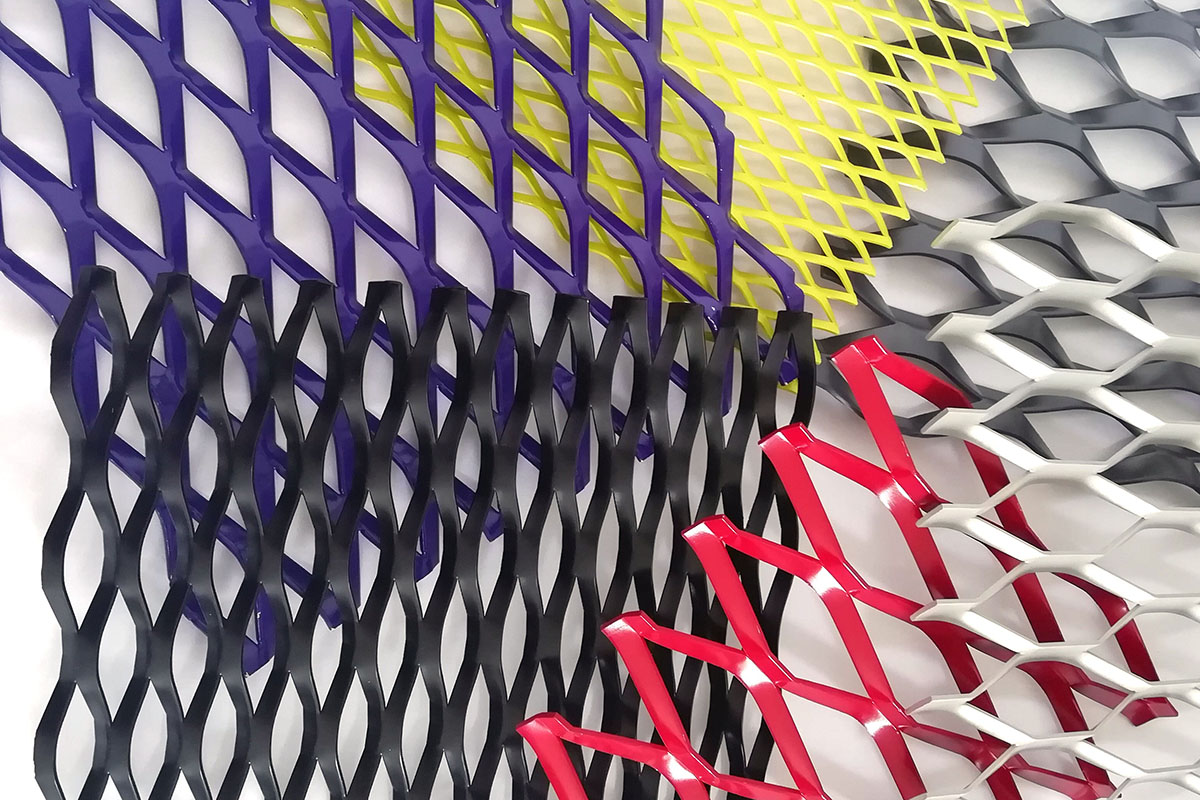
Expanded Aluminum Mesh Panels
Expanded aluminum mesh is produced by cutting and stretching an aluminum plate to create a continuous pattern of openings.
The most recognizable configuration is the diamond-shaped opening.
During the first expansion process, the mesh has a raised structure. It can then be passed through a flattening machine to produce a relatively flat expanded metal sheet.
Raised and flattened expanded aluminum have different surface characteristics.
Raised expanded mesh can provide greater grip and three-dimensional structure, making it useful for flooring, walkways, guards, and other functional applications.
Flattened expanded mesh provides a smoother surface and is often preferred for architectural panels, screens, fencing, and decorative applications.
Aluminum Laser-Cut Mesh Panels
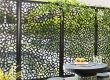
Laser-cut aluminum panels are manufactured using CNC laser equipment to cut patterns into aluminum sheets.
Compared with conventional perforation, laser cutting provides greater flexibility for complex designs.
It can be used to create:
- Geometric patterns
- Decorative motifs
- Logos
- Custom architectural designs
- Privacy screens
- Feature panels
The process can provide precise cutting and clean edges, making laser-cut aluminum particularly attractive for architectural projects where visual design is as important as functionality.
Aluminum Mesh Panels vs. Aluminum Sheet
A solid aluminum sheet provides maximum coverage, while a mesh panel contains openings that allow air, light, or other media to pass through.
This distinction makes mesh panels particularly useful when a project requires controlled openness.
For example, an architectural facade made from aluminum mesh can provide shading and visual separation while maintaining airflow. Similarly, a perforated equipment cover can provide protection without completely blocking ventilation.
The appropriate structure depends on what the panel needs to accomplish.
Why Choose Aluminum for Mesh Panels?
Lightweight Construction
One of aluminum’s biggest advantages is its relatively low density.
For large architectural panels, screens, and fabricated components, lower weight can simplify transportation, handling, and installation.
This can be particularly valuable for projects involving large facade areas or suspended structures.
Corrosion Resistance
Aluminum naturally forms a thin oxide layer when exposed to air, helping protect the underlying metal from corrosion.
This makes aluminum mesh suitable for many indoor and outdoor applications.
However, material selection should still consider the specific environment. Chemical exposure, coastal conditions, contact with dissimilar metals, and surface treatment requirements can all affect long-term performance.
Easy Fabrication
Aluminum can generally be cut, formed, and fabricated relatively easily.
This makes aluminum mesh suitable for projects requiring additional processing, such as:
- Cutting
- Bending
- Framing
- Punching
- Laser cutting
- Panel fabrication
Architectural Appearance
The combination of metallic texture, open area, and different patterns gives aluminum mesh considerable design flexibility.
Depending on the manufacturing process and surface treatment, it can create anything from a simple industrial appearance to a highly customized architectural facade.
How to Choose the Right Aluminum Mesh Panel
The correct product should be selected based on the project’s actual requirements rather than appearance alone.
Consider the Application
First determine what the mesh needs to do.
Is it primarily required for:
- Filtration?
- Insect protection?
- Ventilation?
- Security?
- Privacy?
- Decoration?
- Flooring?
- Building cladding?
This immediately narrows down the appropriate mesh structure.
Consider the Required Open Area
Open area represents the proportion of the panel occupied by openings.
A higher open area generally allows more air and light to pass through, while a lower open area provides greater coverage and privacy.
For architectural screens and ventilation panels, open-area requirements can be particularly important.
Consider Strength and Weight
For walkways, floors, railings, guards, and load-bearing applications, the panel must provide adequate structural performance.
For decorative facades and suspended screens, weight may be a more important consideration.
Aluminum is attractive for applications where reducing overall panel weight is beneficial.
Applications of Aluminum Mesh Panels
The versatility of aluminum allows mesh panels to serve both functional and decorative purposes. The most suitable mesh type depends on whether the priority is filtration, protection, ventilation, structural performance, or appearance.
Window and Door Screens
Fine aluminum woven mesh is commonly used for window and door screens.
The small openings can help prevent mosquitoes, flies, and other insects from entering while allowing air and daylight to pass through. Aluminum is also a practical choice for humid environments because of its corrosion resistance.
Industrial Filtration and Screening
Aluminum mesh can be used in filtration and screening applications where lightweight construction and corrosion resistance are important.
Typical applications include:
- Natural gas filtration
- Oil filtration
- Petroleum equipment
- Chemical industry screens
- Experimental equipment
- Material screening
For these applications, mesh count, wire diameter, opening size, and material grade should be specified according to the actual filtration requirements.
Security Screens
Aluminum mesh panels can also be fabricated into protective screens for doors, windows, machinery, and equipment.
Perforated and expanded configurations provide a physical barrier while maintaining airflow and visibility.
For high-security applications, however, the mesh should be selected based on the required impact, cutting, and structural resistance rather than choosing aluminum solely for its lightweight properties.
Building Facades and Wall Cladding
Architectural applications are one of the major uses of aluminum mesh panels.
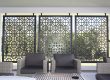
Perforated, expanded, and laser-cut panels can be used for:
- Building facades
- Exterior wall cladding
- Sunshades
- Privacy screens
- Interior partitions
- Decorative walls
- Ceilings
- Restaurant and retail interiors
Designers can control the opening pattern, density, and surface finish to create different levels of transparency and visual depth.
Laser-cut panels are particularly suitable for projects requiring custom patterns or branding elements.
Fences and Transportation Infrastructure
Expanded and perforated aluminum panels can also be used for fences and protective barriers around railways, highways, airports, and other infrastructure.
Their open structure allows air to pass through while creating a defined physical boundary.
For outdoor projects, the combination of low weight and corrosion resistance can reduce handling and maintenance requirements.
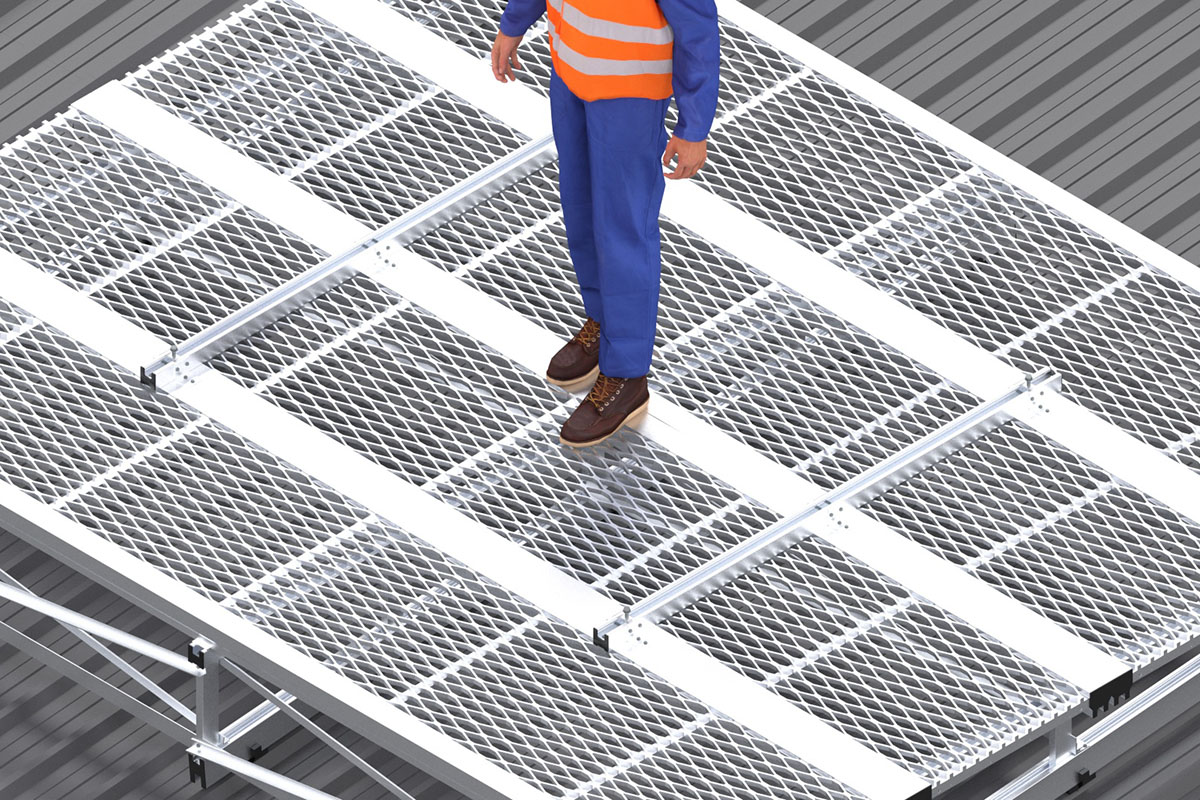
Walkways, Floors, and Railings
Expanded aluminum mesh can be fabricated into walkways, platforms, stair components, handrails, and other functional structures.
The raised surface of expanded mesh can provide useful traction, while the openings allow water and debris to pass through.
For load-bearing applications, the specification must be selected based on span, loading conditions, support spacing, and applicable safety requirements.
How to Select Between Different Aluminum Mesh Types
Choosing between woven, perforated, expanded, and laser-cut aluminum panels becomes easier when the primary requirement is clearly defined.
| Mesh Type | Main Advantage | Typical Applications |
|---|---|---|
| Woven mesh | Fine and uniform openings | Screens, filtration, sieving |
| Perforated mesh | Controlled hole patterns | Facades, ventilation, equipment covers |
| Expanded mesh | Strength and open structure | Flooring, fencing, guards, cladding |
| Laser-cut mesh | Complex customized patterns | Architecture, privacy screens, decoration |
| Crimped mesh | Greater structural stability | Screening, partitions, industrial applications |
There is no universally “best” aluminum mesh panel. The appropriate choice depends on the balance between opening size, strength, weight, appearance, airflow, fabrication, and cost.
Why Choose HIGHTOP Aluminum Mesh Panels?
For international buyers, the manufacturer should be able to provide more than a standard mesh specification.
HIGHTOP supplies different forms of aluminum mesh sheets and panels, including woven, perforated, expanded, crimped, and laser-cut configurations.
This allows customers to select a product according to the actual application rather than being limited to one manufacturing method.
HIGHTOP can also support customized requirements involving panel dimensions, opening patterns, materials, and fabrication.
Explore HIGHTOP Aluminum Mesh Sheets & Panels
What Information Should You Provide for a Quote?
To obtain an accurate quotation, buyers should provide as much technical information as possible.
Useful information includes:
- Mesh type
- Aluminum grade, if specified
- Panel length and width
- Sheet thickness
- Opening size
- Open-area requirement
- Quantity
- Surface treatment
- Application
- Drawing or reference sample
For architectural projects, drawings or pattern files can be particularly helpful when requesting laser-cut or customized perforated panels.
For industrial applications, providing the operating environment and performance requirements allows the manufacturer to recommend a more appropriate specification.
Frequently Asked Questions
What are aluminum mesh panels used for?
They are used for window screens, filtration, ventilation, security screens, building facades, wall cladding, ceilings, partitions, fencing, walkways, flooring, railings, and decorative applications.
Are aluminum mesh panels suitable for outdoor use?
Yes. Aluminum has good natural corrosion resistance and is widely used outdoors. However, the specific alloy, surface treatment, environment, and installation method should be considered for long-term outdoor service.
What is the difference between perforated and expanded aluminum mesh?
Perforated mesh is made by punching holes through an aluminum sheet, while expanded mesh is produced by cutting and stretching the sheet. Perforated mesh offers greater flexibility in hole shapes, while expanded mesh provides a continuous structure with characteristic diamond openings.
Can aluminum mesh panels be customized?
Yes. Panel dimensions, opening patterns, hole sizes, mesh specifications, and certain fabrication requirements can be customized according to the project.
Which aluminum mesh is best for window screens?
Fine aluminum woven mesh is generally suitable for window and door screens because it provides small openings while remaining lightweight and easy to handle.
Can aluminum mesh be used for building facades?
Yes. Perforated, expanded, and laser-cut aluminum panels are commonly considered for facades, cladding, sunshades, privacy screens, and decorative architectural elements.
Are aluminum mesh panels lightweight?
Yes. Low density is one of aluminum’s major advantages. This can reduce the weight of large panels and make transportation and installation easier compared with many steel alternatives.
Get in Touch
Please fill out the form below to contact us whether you have questions or request for a quote, we will get back to you as soon as possible